
Department Sport

Department Curriculum
10 modules that systematically explain how the body powers movement, adapts to physical stress, recovers, and requires nutritional support.
Module 1. Energy sources for muscle activity
Key Topics:
— Energy from a physiological and biochemical perspective
— The body’s main energy systems
— Internal and external energy sources
— Biochemical pathways of energy production
— Adaptation to strength, cardio, and endurance training
After completing this module, you will be able to:
determine which energy systems are involved in different types of exercise, how the body supplies energy for muscle work, and how this affects strength, endurance, fatigue, and recovery.
Module 2. Structure of the Muscular System, Functions, and Biochemical Aspects
Key topics:
— structure of the muscular system
— types of muscle fibers and their functions
— mechanisms of muscle contraction
— biochemical processes underlying muscle function
— adaptation of muscle tissue to physical stress
— the relationship between muscle structure, type of exercise, and results
After completing this module, you will be able to:
relate the structure of the muscular system to the type of exercise and results: assess how different muscle fibers respond to training and what influences strength, endurance, and muscle performance.
Module 3. Protein metabolism in the context of muscle activity
Key Topics:
— The role of proteins in muscle tissue development
— Protein synthesis, breakdown, and oxidation
— Amino acids and their importance for muscle fibers
— Protein requirements for various types of physical activity
— Catabolism, muscle damage, and recovery
— practical approaches to protein intake for athletes
After completing this module, you will be able to:
assess the role of protein in muscle adaptation, growth, and recovery; distinguish between muscle tissue maintenance, muscle mass gain, and conditions where catabolism is heightened.
Module 4. Carbohydrate metabolism in the context of muscle activity
Key topics:
— Carbohydrates as a source of energy for physical activity
— Glucose, glycogen, and their role in muscle function
— Glycogen stores during strength and cardio training
— Glycogen depletion, fatigue, and decreased performance
— Carbohydrate intake before, during, and after exercise
— athlete recovery through proper carbohydrate management
After completing this module, you will be able to:
work with carbohydrates as an energy source: assess the role of glucose and glycogen in endurance, fatigue, performance, and recovery for various athletic goals.
Module 5. Fat metabolism in the context of muscle activity
Key Topics:
— Fats as a source of energy for muscle work
— Fat oxidation and the utilization of fatty acids by muscles
— The role of fats in prolonged exercise and endurance
— An athlete’s metabolic flexibility
— Ketogenic and high-fat diets in a sports context
— the balance between carbohydrate and fat energy supply
After completing this module, you will be able to:
assess the role of fats in energy supply and endurance, determine when the body utilizes fatty acids more actively, understand how metabolic flexibility develops, and identify the limitations of high-fat strategies in sports.
Module 6. Hormonal Regulation and Metabolism During Physical Activity
Key topics:
— hormones that affect muscle mass, energy metabolism, and recovery
— anabolism and catabolism in a sports context
— stress-related hormonal responses to physical exercise
— the effects of cortisol, insulin, sex hormones, and thyroid hormones
— hormonal adaptation to regular training
— risks of overtraining, energy deficit, and impaired recovery
After completing this module, you will be able to:
distinguish normal hormonal adaptation from signs of overtraining, and assess how cortisol, insulin, sex hormones, and thyroid hormones affect strength, muscle mass, energy, and recovery.
Module 7. Diagnostic Markers in Athletes: Laboratory and Imaging Assessment
Key Topics:
— Laboratory parameters for assessing an athlete’s condition
— Markers of exhaustion, recovery, and deficiencies
— Parameters important for body recomposition
— Evaluating the effectiveness of different types of training
— Instrumental diagnostics in a sports context
— Analyzing the body’s condition not based on a single parameter, but holistically
After completing this module, you will be able to:
systematically assess an athlete’s physical condition using laboratory and diagnostic markers of exhaustion, deficiencies, recovery, body recomposition, and training effectiveness.
Module 8. Types of Training: HIIT, Endurance, Strength, and Interval Training
Key Topics:
— The body’s adaptation to physical stress
— Body recomposition: muscle mass, fat mass, changes in body composition
— The impact of sleep, stress, rest, and recovery
— Overtraining and chronic fatigue
— Fatigue as a biochemical and physiological process
— Long-term maintenance of results
After completing this module, you will be able to:
develop a recovery and body recomposition plan without causing exhaustion: take into account sleep, stress, fatigue, rest, and the body’s long-term adaptation to exercise.
Module 9. Nutrition, supplementation, sports nutrition, and hydration
Key Topics:
— The basics of sports nutrition
— Designing a diet for different goals: muscle gain, fat loss, performance, recovery
— Energy availability and an athlete’s needs
— Hydration and electrolyte balance during exercise
— Evidence-based supplementation in sports
— sports nutrition: when it’s necessary and when it’s not
— practical approaches to nutritional support for athletes
After completing this module, you will be able to:
develop nutritional strategies tailored to specific athletic goals: muscle gain, fat loss, performance, recovery, hydration, and evidence-based supplementation—free from myths.
Module 10. Weight management, sleep, recovery
Key Topics:
— Weight and body composition management
— Weight management in sports and wellness contexts
— The importance of sleep for athletic performance
— Recovery of the nervous and muscular systems
— Prevention of exhaustion, overtraining, and performance decline
— balance between energy deficit, progress, and health
— long-term strategy for maintaining performance
After completing this module, you will be able to:
manage your weight and body composition without compromising your health: take into account energy deficit, sleep, hormonal adaptation, recovery, the risk of overtraining, and long-term maintenance of performance.

Physical activity is not just movement, but a complex biochemical response of the body.
In this department, you will gain a comprehensive understanding of what happens in the body during different types of exercise: which energy systems are activated, how metabolism changes, and the roles played by hormones, recovery, and pre-workout nutrition.
Who is the Academy for?
For professionals and active individuals who want to understand sports through the lens of biochemistry, physiology, and the body’s systemic functions.

For nutritionists, health coaches, and those who want to become one
It provides a comprehensive understanding of nutrition, metabolism, recovery, and energy supply to the body during physical activity.

For students and young medical professionals
Provides a solid foundation in biochemistry, physiology, and nutrition for professional development and the practical application of knowledge in medicine and the health field.

For those who want to gain a deeper understanding of their health
It provides a scientific foundation for informed management of physical activity, nutrition, recovery, and long-term results.

For coaches, physical therapists, and specialists who work with amateur and professional athletes
It helps you understand how the body adapts to physical stress, recovers, and responds to different types of training and levels of physical activity.

For doctors who want to build a solid foundation and develop a deep understanding of biochemistry
It deepens understanding of the metabolic, hormonal, and functional processes that affect the body’s condition during physical activity.

For professional athletes and those who exercise regularly
It helps optimize performance, recovery, adaptation, and body composition through an understanding of energy supply mechanisms, metabolism, and nutritional support.
In the Department of Sports, you will learn how the body responds to physical activity
Not as a collection of training tips, but as a system of processes that determine strength, endurance, adaptation, recovery, and changes in body composition.


Understanding the Biochemistry of Physical Activity
how muscle energy supply, protein, fat, and carbohydrate metabolism, hormonal responses, and recovery affect strength, endurance, adaptation, and athletic performance.

Aligning nutrition with training goals
how nutritional support, hydration, glycogen, protein, and energy availability help build muscle mass, reduce body fat percentage, and support endurance and recovery.

Identify what is hindering progress
how energy deficits, impaired recovery, nutritional deficiencies, hormonal imbalances, or overexertion can affect your well-being, body composition, and results.

Put knowledge into practice
in nutrition, hydration, supplementation, recovery, weight management, and the prevention of overtraining in athletes of all levels.
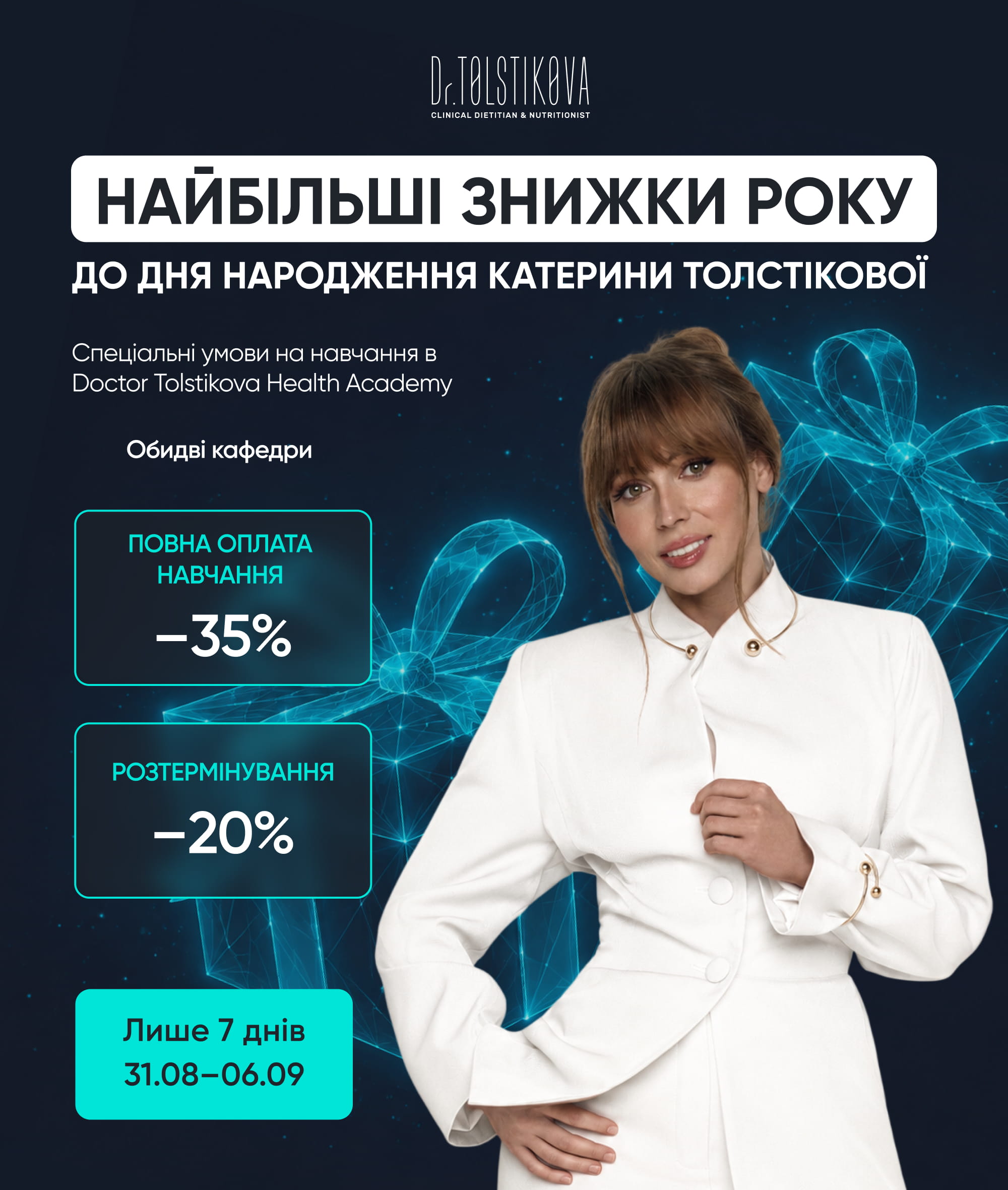
Tuition Fees
*– 5% off for installment payments and -10% off for full payment
(only until June 30, and 🎁 1 extra month of access to the course with full payment)
You will receive:
- Access to all 10 modules
- 5 webinars with the supervising physician
- 1 webinar with Kateryna Tolstikova
- Consultations via the platform’s Q&A section (the opportunity to ask questions on the platform and receive consolidated answers for all students via email each week in the form of a study guide)

You will receive:
- Personal advisor (guides you throughout your studies: helps you understand complex topics, answers your questions, and provides guidance as you learn)
- Access to 10 modules
- 5 webinars with a supervising physician
- 1 webinar with Kateryna Tolstikova
- Consultations via Q&A on the platform (students can ask questions on the platform and receive consolidated answers for all students via email each week in the form of a study guide)
You will receive:
- One-on-one online session with Dr. Kateryna Tolstikova (1 hour)
- Access to all 10 modules
- 5 webinars with a supervising physician
- 1 webinar with Kateryna Tolstikova
- Consultations via Q&A on the platform (the ability to ask questions on the platform and receive consolidated answers for all students weekly via email in the form of
a study guide)
You will receive:
- One-on-one online session with Dr. Kateryna Tolstikova (1 hour)
- Personal mentor (guides you throughout your studies: helps you understand complex topics, answers your questions, and provides guidance as you learn)
- Access to 12 modules
- 5 webinars with a supervising physician
- 1 webinar with Kateryna Tolstikova
- Consultations via the platform’s Q&A section (students can ask questions on the platform and receive consolidated answers for all students via email each week in the form of a study guide)
What will you get?
After completing the course, you will gain a comprehensive understanding of sports biochemistry and acquire tools that you can apply in your work and in your own training regimen.


academic hours




Bonuses and a referral program for students
Share the Academy with your friends and earn rewards for every successful sign-up using your personal code.
You earn points for completing the training, finishing assignments, and advancing through the program’s stages.
You can redeem your accumulated points for lectures, guides, and a discount on future courses at the Academy.
Frequently Asked Questions
To help you choose the right department, it is important to consider your goals, interests, and professional needs; you can start with Department 1, Biochemical and Molecular Nutrition, as it is a foundational course that provides a strong base for other areas of study, and if you need additional guidance, feel free to contact our support team.
The duration of study at Doctor Tolstikova Health Academy depends on the department you choose: each department includes approximately 80 academic hours of learning and consists of 8–12 modules, and you can study either intensively, with new modules released every 2–3 weeks, or at your own pace over the course of a year; each module includes 2–3 hours of video lectures, practical assignments, module assessments, and additional self-study materials, while access to the department materials remains available for 1 year from the date of purchase, allowing you to choose the learning pace that suits you best.
The duration of study at Doctor Tolstikova Health Academy depends on the department you choose: each department includes approximately 80 academic hours of learning and consists of 8–12 modules, and you can study either intensively, with new modules released every 2–3 weeks, or at your own pace over the course of a year; each module includes 2–3 hours of video lectures, practical assignments, module assessments, and additional self-study materials, while access to the department materials remains available for 1 year from the date of purchase, allowing you to choose the learning pace that suits you best.
A medical background is not required — your motivation, time, and willingness to learn are enough; the program is challenging because it is built on deep knowledge of medicine and biochemistry, but if you are motivated and ready to put in the effort, you will be able to complete this journey, with support from the glossary, additional materials, webinars with a curator, and the care team, although you will need to take notes, revisit lectures more than once, study the materials carefully, and practice consistently, and while some tests may not be passed on the first attempt, that is completely normal — we will help you understand the material and keep moving forward, because the Academy provides both structure and support, but the most important factor is your own desire and persistence, and if you are truly eager to understand how the body works, this course will become a valuable experience and open new horizons for you.
Yes, Doctor Tolstikova Health Academy provides the opportunity to ask questions and receive answers throughout your training.
The communication method depends on the selected package.
Yes, during your studies at Doctor Tolstikova Health Academy, you will have the opportunity to ask questions and receive answers, while the communication format depends on the plan you choose.